
Pool Tips & Techniques
Pool Cue Maintenance: How to Care for Your Cue and Make It Last
Mar
A quality pool cue is an investment. Whether you spent $100 or $400, proper maintenance keeps your cue playing like new for years — even decades. This guide covers everything you need to know about pool cue care, from daily habits to seasonal maintenance.
Daily Cue Care Habits
Wipe Down After Every Session
Your hands transfer oils, sweat, and chalk dust to the shaft every time you play. Over time, this buildup creates a sticky surface that slows your stroke. After each session:
- Wipe the shaft with a clean, dry microfiber cloth
- Wipe from butt to tip in one direction — avoid circular motions
- Clean the butt sleeve if it has a wrapless finish
Store Properly
- Always use a case when transporting your cue
- Store upright in a cue rack at home — never lean it against a wall at an angle
- Avoid leaving your cue in a car trunk — extreme heat warps wood shafts
- Keep away from direct sunlight, heaters, and air conditioning vents
Shaft Maintenance by Material
Maple Wood Shafts
Wood shafts require the most maintenance but reward you with natural feel and feedback.
Weekly:
- Burnish the shaft with a leather burnishing pad — this smooths the grain and reduces friction
- Use a shaft cleaner solution (like Q-Wiz or Cue Silk) to remove embedded oils
Monthly:
- Lightly sand with 1500-2000 grit sandpaper if the shaft feels rough (very light pressure)
- Apply shaft conditioner or sealant to protect against moisture
- Check for warping by rolling the shaft on a flat surface — it should roll smoothly without wobble
Seasonal:
- In humid climates, store with silica gel packets in your case
- In dry climates, avoid over-conditioning — too much product attracts dust
Recommended wood cue: Wolf AP — Canadian maple W1 shaft responds well to regular maintenance.
Carbon Fiber Shafts
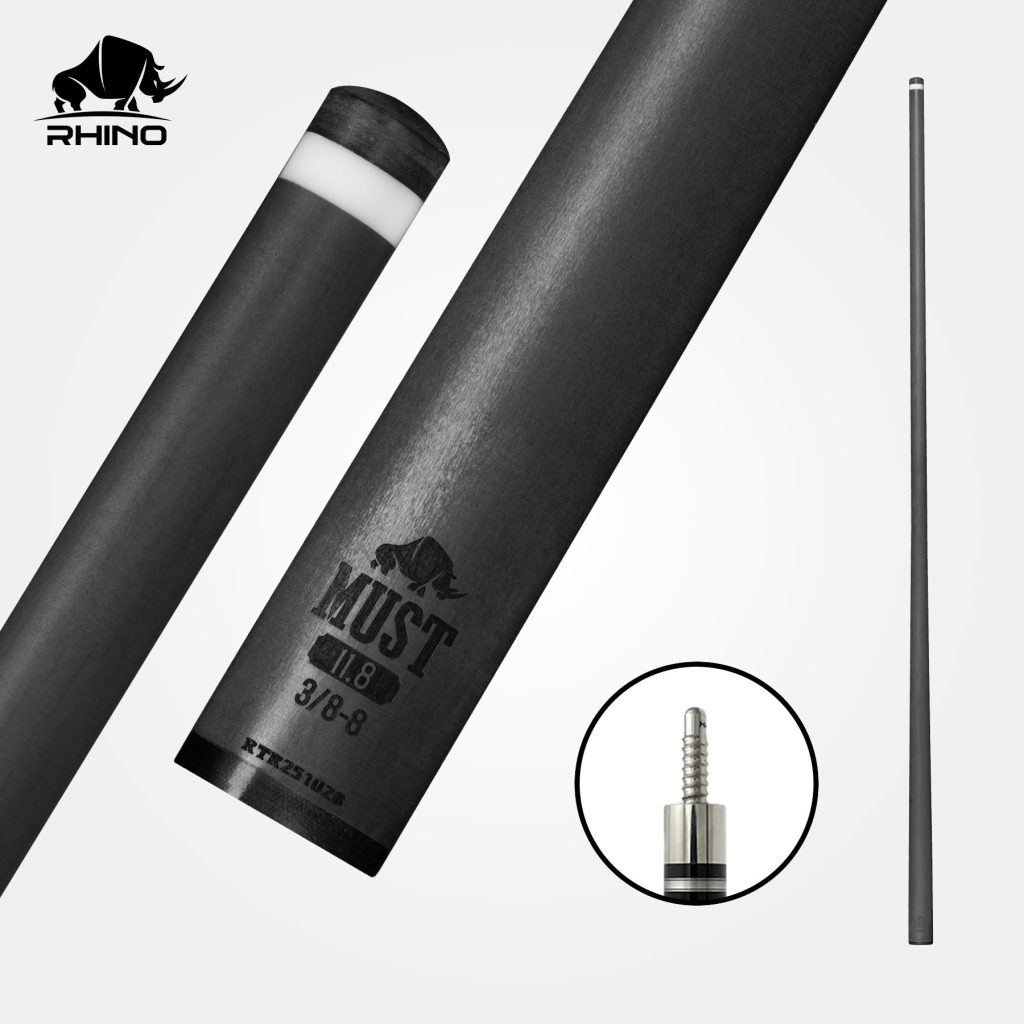
Carbon fiber is the lowest maintenance shaft material. No warping, no grain to manage, no conditioning needed.
- Cleaning: Wipe with a damp microfiber cloth. For stubborn chalk buildup, use isopropyl alcohol on a cloth
- No burnishing needed — carbon fiber surface stays consistent
- No warping checks needed — carbon fiber does not warp under any conditions
- No sealant or conditioner needed — the material is naturally moisture-resistant
This near-zero maintenance is one reason carbon fiber cues like the Rhino RETRO and ALLIN Turtle are increasingly popular.
Glass Fiber Shafts
Glass fiber maintenance falls between maple and carbon fiber:
- Wipe down after each session with a dry cloth
- Occasional damp cloth cleaning for chalk buildup
- No burnishing or conditioning required
- Minimal warping risk, but avoid extreme temperature changes
The Rhino G-W series is a great low-maintenance option for players who want easy care with natural feel.
Tip Maintenance
The tip is the most critical contact point on your cue. A poorly maintained tip causes miscues, inconsistent spin, and frustration.
Shaping
Your tip should have a nickel-to-dime radius curve (slightly rounded dome). A flat tip causes the cue ball to slide rather than grip. Use a tip shaper tool to maintain the proper dome shape every few sessions.
Scuffing
A smooth, glazed tip does not hold chalk well. Lightly scuff the tip surface before each session with a tip pick or scuffer. This creates micro-grooves that grip chalk better.
When to Replace Your Tip
- Tip is worn down to less than 1-2mm thickness
- Tip is mushrooming (spreading wider than the ferrule)
- Hardened and no longer holds chalk despite scuffing
- Cracked, chipped, or separating from the ferrule
Most tips last 6-12 months with regular play. Premium leather tips (like Kamui or Tiger) last longer and perform more consistently than budget tips.
Joint and Ferrule Care
- Keep joint threads clean — wipe with a dry cloth before assembling. Dirt in threads causes a loose connection
- Do not over-tighten — hand-tight is sufficient. Over-tightening can strip threads or crack wood
- Inspect the ferrule periodically for cracks. A cracked ferrule affects accuracy and should be replaced by a professional
- Joint protectors are optional but recommended for travel — they prevent thread damage in your case
Common Mistakes That Damage Pool Cues
- Leaving in a hot car — Heat warps wood, loosens joints, and degrades adhesives
- Leaning against walls — Constant angle pressure bends the shaft over time
- Using as a bridge stick — Pressing down on the shaft while bridging can cause micro-bends
- Slamming on the table after a miss — Damages the butt, tip, and your dignity
- Sharing without cleaning — Other players hands transfer different oils and moisture
- Over-sanding wood shafts — Aggressive sanding removes protective finish and thins the shaft
Maintenance Schedule Summary
| Task | Maple | Carbon Fiber | Glass Fiber |
|---|---|---|---|
| Wipe down | Every session | Every session | Every session |
| Burnish shaft | Weekly | Never | Never |
| Shaft cleaner | Weekly | Monthly | Monthly |
| Light sanding | Monthly | Never | Never |
| Conditioner | Monthly | Never | Never |
| Warp check | Monthly | Never | Quarterly |
| Tip shape | Every 3-5 sessions | Every 3-5 sessions | Every 3-5 sessions |
| Tip scuff | Every session | Every session | Every session |
| Joint cleaning | Monthly | Monthly | Monthly |
FAQ: Pool Cue Maintenance
How often should I replace my pool cue tip?
Every 6-12 months with regular play (3+ times per week). Casual players may get 1-2 years from a quality tip. Signs of replacement: mushrooming, glazing, cracking, or worn below 2mm.
Can I fix a warped pool cue shaft?
Minor warps in maple shafts can sometimes be straightened by a professional cue repair tech using controlled heat and pressure. Severe warps usually mean replacement. This is why carbon fiber cues like the Rhino RETRO are popular — they never warp.
What is the best pool cue cleaner?
For maple: Q-Wiz shaft cleaner or Cue Silk. For carbon fiber and glass fiber: a damp microfiber cloth or isopropyl alcohol wipe. Avoid household cleaners — they can damage finishes and leave residue.
Should I use a cue glove?
Gloves reduce oil transfer and friction. They are especially helpful if your hands sweat or if you play in humid environments. Not required, but they do reduce shaft maintenance needs.
Invest in Care, Save on Replacements
Fifteen minutes of maintenance per week can extend your cue life by years. A well-maintained $200 cue outperforms a neglected $500 cue every time. Browse our pool cue collection at HDMPool — and take care of the one you choose.
Related Articles
Maintenance Accessories
- Cue Tips — Replace worn tips
- Cue Extensions
- Ferrules & Parts
