Buying Guides
How to Choose Your First Pool Cue: Beginner’s Guide
Mar
Buying your first pool cue is a game-changing moment. No more guessing which house cue is the least warped. No more adjusting to a different stick every session. Your own cue means consistency, confidence, and faster improvement. But with hundreds of options on the market, how do you choose the right one? This guide breaks it down.
Why You Need Your Own Pool Cue
House cues at bars and pool halls are shared by dozens of players daily. They get dropped, chalked unevenly, and exposed to temperature swings. The result: warped shafts, worn tips, and inconsistent weight. Playing with a different cue every time is like playing tennis with a different racket each match — you never build muscle memory.
Your own cue gives you:
- Consistent weight and balance — your stroke adapts to one specific feel
- Straight shaft — no guessing if the cue pulls left or right
- Fresh tip — better grip on the cue ball for spins and english
- Confidence — knowing your equipment is reliable lets you focus on technique
Key Factors When Choosing a Pool Cue
1. Shaft Material
This is the biggest decision you will make. Three main options:
- Maple wood — Traditional, great feedback, affordable ($100-$200). Best for beginners learning proper technique. Our pick: Wolf AP with W1 shaft
- Carbon fiber — Ultra-low deflection, zero warping, minimal maintenance ($150-$400). Best for players who want modern technology. Our pick: ALLIN Turtle 2024
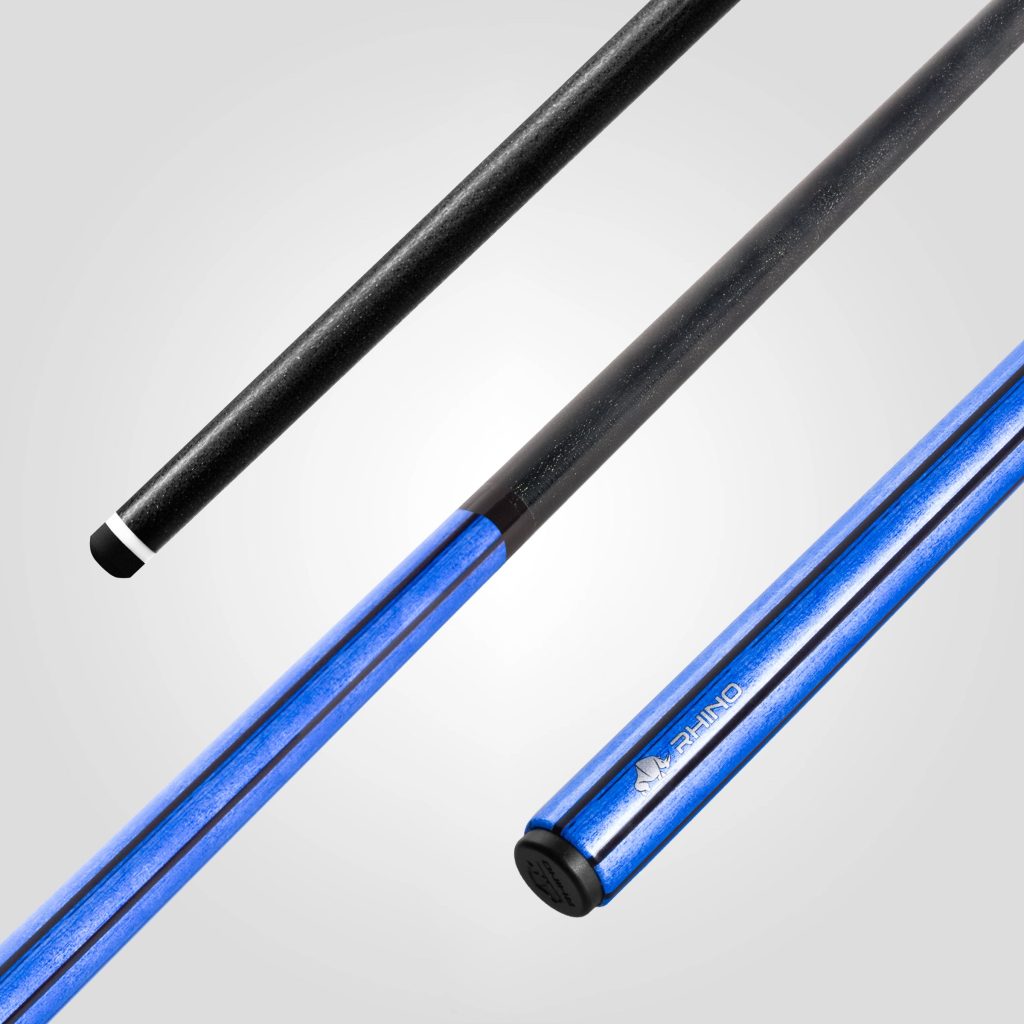
- Glass fiber — Middle ground between maple and carbon ($200-$260). Low deflection with more natural feel. Our pick: Rhino G-W series
For most beginners, we recommend starting with maple. It teaches you proper stroke mechanics because you feel every mistake. Once your fundamentals are solid, upgrading to carbon fiber amplifies your skills.
2. Weight
Pool cues typically range from 18 to 21 ounces. Here is what different weights offer:
- 18-19 oz — Lighter, more finesse and control. Better for soft shots and position play
- 19-19.5 oz — The sweet spot. Most players and professionals prefer this range
- 20-21 oz — Heavier, more power for break shots. Can fatigue your arm in long sessions
Our recommendation: Start at 19 oz. It is versatile enough for every shot type and will not tire you out during practice.
3. Tip Size
- 13mm — Standard on many cues. Very forgiving, good for beginners
- 12.5mm — Most popular size. Balance of control and forgiveness
- 11.75-12mm — Smaller tips allow more spin but require precise aiming
Beginners should stick with 12.5mm or 13mm. Smaller tips are tempting for the spin potential, but they punish off-center hits.
4. Joint Type
The joint connects the shaft to the butt. Common types:
- 3/8-8 — Most universal joint. Used by Rhino, Lucasi, and many brands. Easy to find replacement shafts
- 5/16-18 — Common on entry-level cues
- Uni-Loc — Predator proprietary. Quick-release, premium feel
- Radial — McDermott proprietary
We recommend 3/8-8 joint for beginners. It is the most common, so you have maximum flexibility to upgrade shafts later.
5. Wrap Style
- Leather wrap — Classic grip, absorbs moisture. Good for sweaty hands
- Wrapless — Clean look, smooth feel. Popular with experienced players
- Irish linen — Traditional, textured grip
- Rubber/silicone — Maximum grip, common on entry cues
If your hands sweat during games, choose leather wrap. If you prefer a sleek feel and your hands stay dry, wrapless is elegant and low-maintenance.
Best First Pool Cues by Budget
Under $150: Wolf AP Billiard Cue
The Wolf AP is our top pick for beginners. Premium Canadian maple W1 shaft, clean design, reliable performance. It teaches proper technique without overwhelming you with technology. Solid construction that will last years of regular play.
$150-$200: ALLIN Turtle 2024
Ready to skip ahead? The ALLIN Turtle 2024 gives you full carbon fiber construction at a price that used to be maple-only territory. Low deflection means your shots go where you aim, even with spin. Lightweight for comfortable long sessions.
$200-$260: Rhino G-W Series
The Rhino G-W pairs glass fiber low deflection with exotic Amboyna or Bocote wood butts. Beautiful craftsmanship meets practical performance. A cue you will be proud to pull out at any pool hall.
$260-$320: Rhino RETRO Series
If budget allows, the Rhino RETRO is the best value in pool cues today. Carbon fiber shaft with exotic wood butt (Cocobolo, Thuya, Bocote, Pale Moon Ebony). Professional-grade performance at half the price of comparable Predator or Jacoby cues.
Common Beginner Mistakes to Avoid
- Buying the cheapest cue possible — Sub-$50 cues warp quickly and have poor tips. Invest at least $100 for a cue that lasts
- Overspending on your first cue — You do not need a $500+ cue to learn. Save premium upgrades for when your skills justify them
- Ignoring the case — Always buy a case. Protecting your cue from bumps and temperature is essential
- Choosing style over substance — Fancy inlays look great but add cost without improving play. Focus on shaft quality first
- Not trying before buying — If possible, test different weights and tip sizes at a local pool hall before purchasing
Essential Accessories for New Cue Owners
- Cue case — Hard case for travel, soft case for local use
- Chalk — Good chalk (like Kamui or Predator) makes a noticeable difference
- Tip tool — For shaping and scuffing your tip to maintain grip
- Shaft cleaner — Keep your shaft smooth and free of chalk and oil buildup
- Glove — Optional, but eliminates friction for smoother strokes
FAQ: Choosing Your First Pool Cue
How much should a beginner spend on a pool cue?
$100-$200 is the sweet spot for beginners. At this price range you get quality construction that will last years. The Wolf AP ($100-$150) is our top beginner pick.
Should a beginner get a carbon fiber cue?
It depends on your goals. If you plan to play regularly and competitively, starting with carbon fiber (like the ALLIN Turtle) saves you from buying twice. If you want to learn traditional technique first, start with maple.
What weight pool cue should a beginner use?
19 ounces. It is the most versatile weight, suitable for every shot type. You can adjust later once you understand your playing style.
One-piece or two-piece cue?
Always two-piece. One-piece cues cannot be transported easily and are typically lower quality. Every cue we sell at HDMPool is two-piece with professional joints.
Where can I buy a quality beginner pool cue?
HDMPool.com offers curated pool cues from Wolf, ALLIN, Rhino, and CUEELF — all quality-checked and shipped worldwide with tracking. Contact us for personalized recommendations based on your budget and skill level.
Ready to Get Your First Cue?
Browse our complete pool cue collection or start with our top beginner pick, the Wolf AP Billiard Cue. Every purchase includes worldwide shipping and our satisfaction guarantee.
Related Articles
Best Cues for Beginners
- OPW One Piece — From $159, entry-level carbon
- Nebula 2 Series — From $299, great first cue
- RETRO Classic — From $259, classic style
