
Billiards Blog, Pool Tips & Techniques
Mastering Pool Bridges: Essential Techniques and Tips for Every Player
Sep
Mastering the bridge is essential for any pool player looking to improve their game. It’s often overlooked by beginners who may not fully understand the best techniques for creating a solid bridge. Simply put, the bridge is formed by your non-cue hand and serves as a stable guide, allowing you to move the cue back and forth in a straight, controlled line. There are various types of bridges suited for different situations, but all of them share some fundamental principles. Understanding and applying these principles will greatly enhance your ability to control your shots and elevate your overall performance on the table.
A proper pool bridge should:
- Provide a stable and solid foundation.
- Allow the cue to move smoothly and effortlessly.
- Maintain the cue on a straight and precise line for accurate shots.
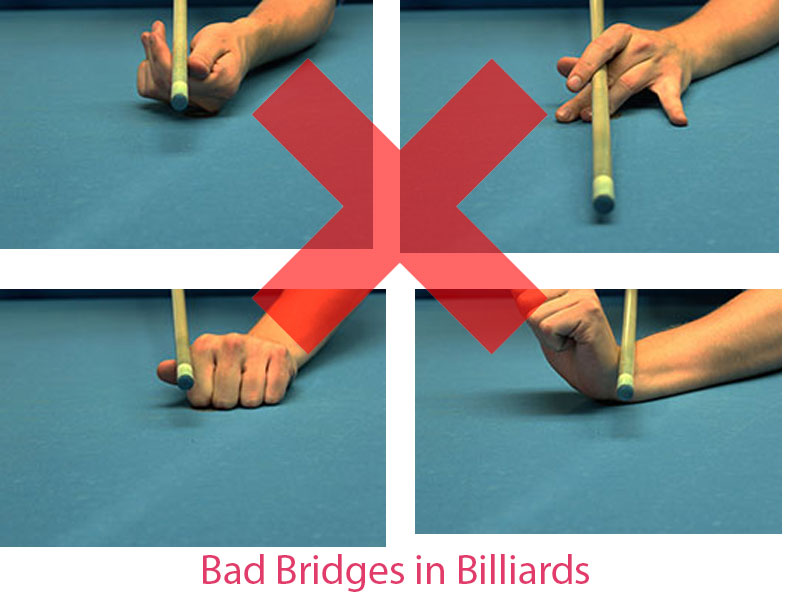
Examples of Poor Bridges
To build a solid foundation for accuracy, your bridge must adhere to these core principles. A weak or improperly formed bridge can greatly hinder your ability to deliver the cue smoothly and comfortably, directly affecting your shot-making consistency. If your bridge lacks stability or control, you’ll find it challenging to pocket balls consistently, no matter how good your aim might be. The bridge is the foundation of every shot, and without a strong, reliable bridge, your game will always be compromised.
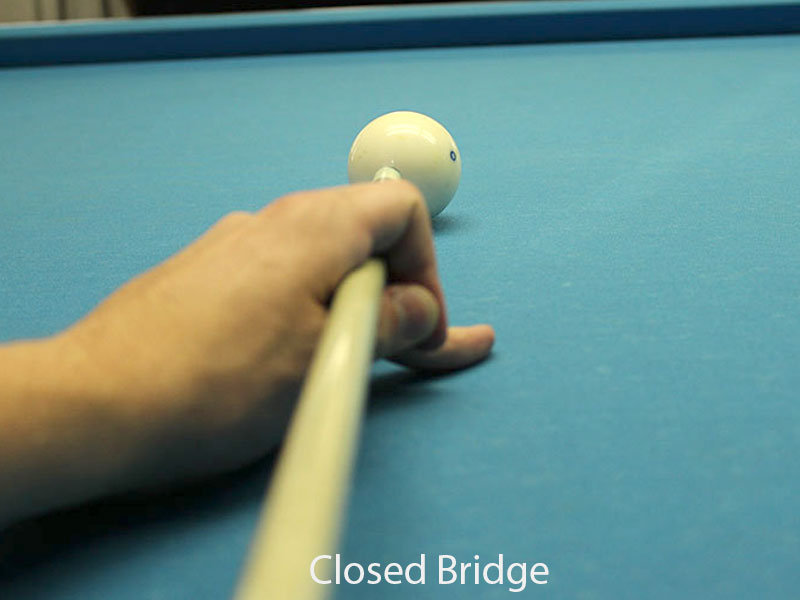
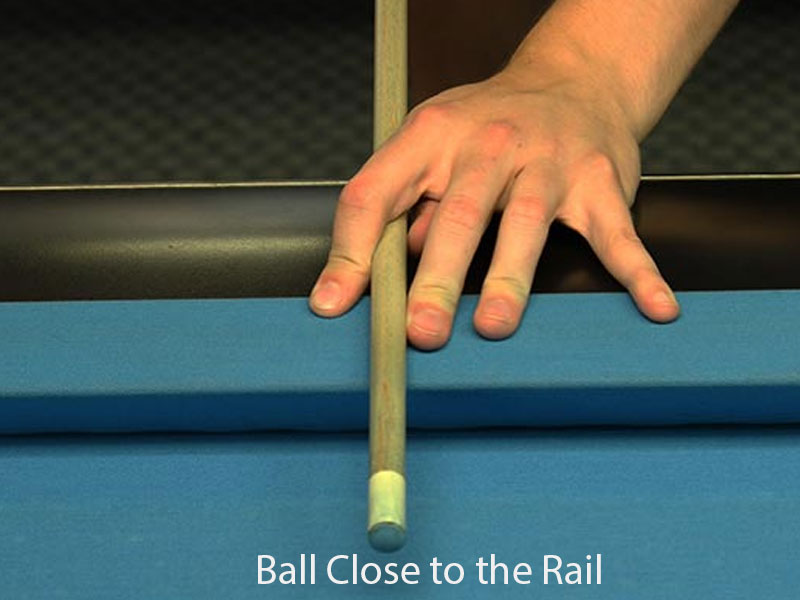
Types of Bridges
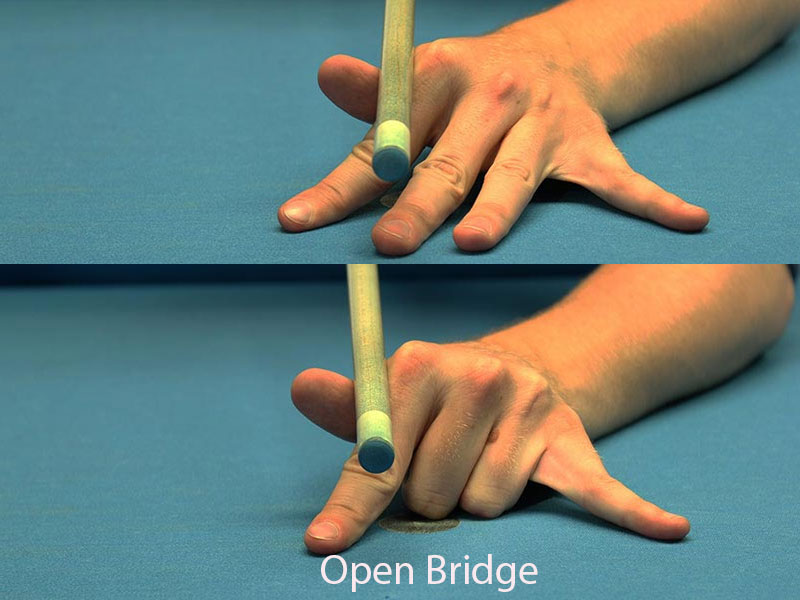
Open Bridge
The open bridge is often the go-to choice for beginners due to its simplicity and ease of use. It provides a solid and stable foundation while allowing maximum visibility of the cue ball during your stroke. There are several variations of the open bridge that can be adapted to different situations, and players often tweak the style to suit their comfort and playing style.
To create a basic open bridge, bring your thumb and index finger together to form a groove where the cue stick will rest. Position your palm firmly on the table, aligning it with your shot. Ensure that both your palm and fingers are securely planted to create a stable and reliable bridge, minimizing movement as you strike the ball. This setup will give you the control and steadiness needed for accurate shots.
Related Articles
Get the Right Cue
